OP-ED: Trump’s Appraisal, Somalia’s Test: Leadership, Reform, and Global Perception
-
 Abdirahman Jeylani Mohamed
- Posted On 13-12-2025, 08:26PM
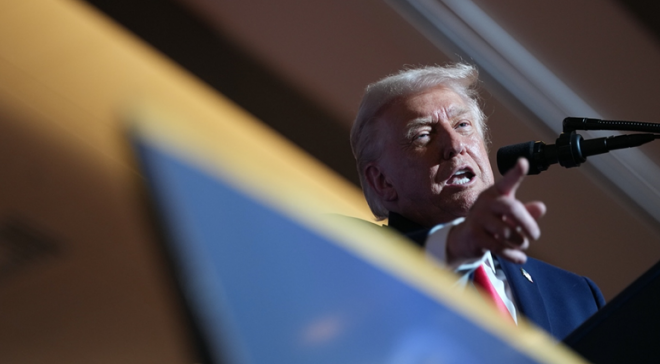
OP-ED: United States President Donald Trump’s recent remarks about Somalia — delivered in language that many observers have described as “dismissive and demeaning” — have reignited debate about global perceptions of the Horn of Africa nation.
At the same time, Somalia continues to confront profound and long-standing governance challenges.
A comprehensive understanding of Somalia’s present moment — and its future prospects — demands not only a critique of simplistic external rhetoric, but also a sober assessment of internal leadership shortcomings and the tangible work still needed to build resilient state institutions.
The Power and Pitfalls of Rhetoric
Language matters in foreign policy. When influential political figures employ reductionist descriptors to characterize an entire country, it affects how that nation is perceived in diplomatic corridors, newsrooms, and public discourse. Such narratives can obscure complexity, reinforce stereotypes, and complicate the efforts of policymakers, humanitarian organizations, and diaspora communities working in and for Somalia.
Nonetheless, focusing solely on inflammatory rhetoric misses the larger story: Somalia’s position on the world stage is shaped both by how others describe it and by how its own leaders choose to govern.
The U.S. and Somalia: Engagement Amid Complexity
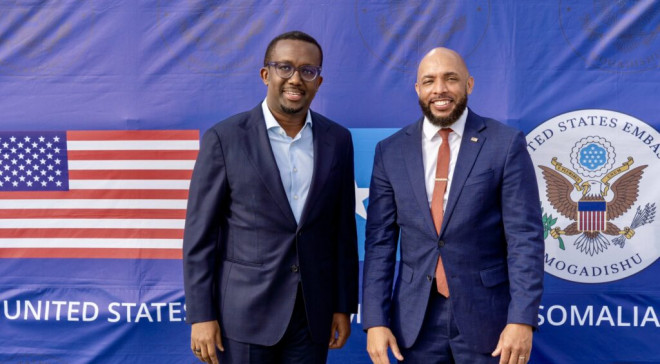
Over the past two decades, the United States has been one of Somalia’s most significant international partners. U.S. engagement has spanned military support, humanitarian aid, economic assistance, and efforts to strengthen governance and financial stability — reflecting both strategic interests and humanitarian imperatives.
Security and Counter-Terrorism Cooperation
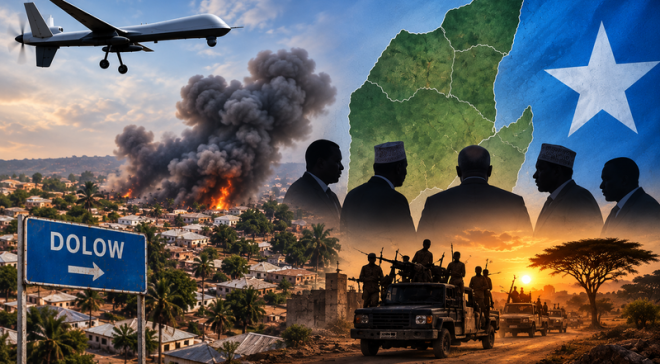
Somalia remains a key front in the broader global effort against violent extremist groups. U.S. engagement in this domain has included training and equipping Somali security forces, advisory support, intelligence sharing, and coordination with multilateral partners.
American assistance has helped bolster specialized units such as the Somali National Army’s elite Danab Brigade, a force trained for counter-terrorism operations and rapid response to extremist threats. Though U.S. military footprints in Somalia are limited compared to past years, security cooperation continues as part of broader efforts to degrade al-Shabaab and affiliated groups.
However, security advances are uneven, and the insurgency persists across large swaths of rural southern and central Somalia. The complexity of the threat underscores the need for sustained, coordinated strategies that strengthen Somali capacity while avoiding overdependence on foreign actors.
Humanitarian and Development Assistance
For decades, the United States has been the largest single bilateral donor of humanitarian assistance to Somalia. In fiscal year 2023, the United States committed approximately $1.18 billion in foreign aid — a combination of humanitarian, governance, and economic support — with nearly 85 percent allocated to economic and humanitarian purposes. This assistance ranked Somalia among the top recipients of U.S. aid globally.
U.S. funding has supported emergency food and nutrition programs, health services, water and sanitation, and resilience initiatives designed to protect vulnerable populations from climate shocks, displacement, and conflict. In 2024–25, USAID even provided additional funds to strengthen resilience and food security through multi-year projects targeting tens of thousands of households affected by climate and conflict-related crises.
Yet U.S. foreign aid to Somalia has fluctuated with shifting policy priorities. In fiscal year 2025, U.S. aid reportedly dropped to approximately $128 million, a marked decline from the multi-hundred-million-dollar levels of previous years, reflecting broader budget pressures and strategic recalibrations.
The practical effects of these shifts are visible on the ground: recent reporting indicates that cuts to U.S. funding have led to closures of vital health and nutrition programs for children and vulnerable populations — with ripple effects across already fragile systems.
Debt Relief and Economic Reengagement
In an important financial milestone, Somalia reached the Completion Point under the Heavily Indebted Poor Countries (HIPC) initiative, unlocking total debt service savings of approximately $4.5 billion and reducing its external debt dramatically as a share of GDP.
The United States played a central role in this process by agreeing to cancel 100 percent of its bilateral claims — around $1 billion — under HIPC, a gesture intended to strengthen Somalia’s macroeconomic stability and help free up resources for development priorities.
This milestone provides Somalia with greater fiscal breathing room to invest in infrastructure, human capital, and public services — if Somali leaders can marshal coherent policies and transparent institutional practices.
Internal Governance: A Persistent Constraint
While external engagement has been extensive, Somali leaders have struggled to convert international support into sustainable, accountable governance outcomes. Persistent issues include:
Fragmented political coalitions and elite competition have impeded decisive reform.
Weak public financial management and limited domestic revenue mobilization. Dependence on external aid for basic services, with foreign assistance often accounting for a large share of social spending.
These constraints limit Somalia’s sovereign capacity to chart its own development trajectory and weaken its negotiating position with external partners. They also fuel public frustration, which too often is directed only at foreign actors rather than at domestic accountability failures.
A Shared Imperative: Strategic Partnership and Domestic Reform
The complexities of Somalia’s trajectory underscore a clear dual imperative: External partners, including the United States, must sustain engagement that is strategic, respectful, and grounded in long-term partnership rather than episodic rhetoric and short-term political calculation.
Somali leaders and elites must advance meaningful reforms that strengthen institutions, reduce corruption, and expand domestic revenue and service delivery capacity.
Somalia occupies a strategic position — economically, geopolitically, and socially — in the Horn of Africa. Its stability matters for regional security, maritime trade, counter-terrorism cooperation, and humanitarian resilience. Managing these stakes responsibly requires diplomatic language and policies that acknowledge complexity rather than amplify divisive simplifications.
Conclusion: Beyond Rhetoric to Real Outcomes
Simplistic external critiques and indulgent internal complacency each distort Somalia’s reality. The country’s challenges are real, its people resilient, and its prospects tied to both domestic leadership and responsible international engagement.
Ultimately, achieving sustainable peace and development in Somalia will depend on a balanced approach — one that confronts poor governance where it exists, and rejects reductive narratives that obscure both suffering and potential.
This is not merely a matter of political correctness. It is a matter of policy effectiveness, strategic clarity, and respect for Somali agency in shaping the future of their country.
The author is Abdirahman Jeylani Mohamed, a Somali journalist based in Mogadishu, a foreign policy commentator, and communications specialist. You can reach out to him: Canaanbinu55@gmail.com