Pakistan Signals Possible Military Action Against Houthis Over Saudi Attacks
-
 Staff Reporter GAROWE ONLINE
- Posted On 09-09-2026, 04:22PM
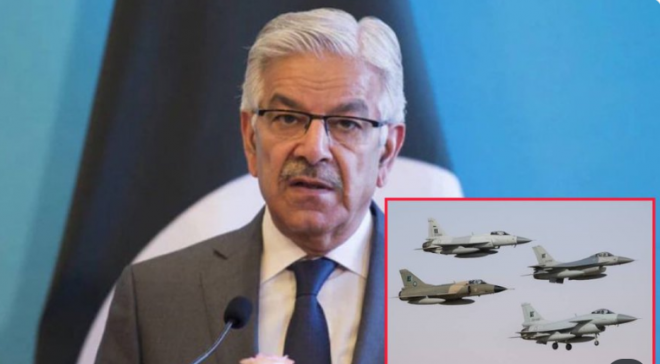
ISLAMABAD — Pakistan's Defence Minister Khawaja Asif has warned that continued Houthi attacks on Saudi Arabia could trigger a mutual defence agreement signed by Pakistan, Saudi Arabia and Türkiye, potentially drawing Islamabad directly into the conflict in Yemen.
Asif said the Mecca Mutual Defence Pact provides that an armed attack against any one of the three signatories would be treated as an attack against all of them.
“There is no ambiguity. If unprovoked aggression or the war in Yemen spills into Saudi Arabia, the pact will certainly become operational,” Asif said, indicating that Pakistan would fulfil its obligations under the agreement if required.
His remarks came after the Houthis launched a series of missile and drone attacks against targets in southern Saudi Arabia on September 8.
The attacks reportedly targeted military and energy facilities in areas including Abha, Jizan, Najran and Khamis Mushait, with at least 73 people reported wounded.
The escalation has raised fears that the conflict in Yemen could widen beyond the country's borders and draw additional regional powers into direct military confrontation with the Iran-backed Houthi movement.
Pakistani sources cited by Türkiye Today said Islamabad was considering possible air strikes against Houthi positions in Saada and other parts of Yemen if Riyadh formally requested military assistance.
However, the sources stressed that no final decision had been made on whether Pakistan would conduct such strikes.
Any Pakistani military intervention in Yemen would represent a significant escalation, potentially opening a new front in the regional confrontation between the Houthis and Saudi Arabia.
The development could also have wider implications for the Middle East, given the Houthis' previous attacks on Saudi territory and their involvement in the broader regional conflict.
Recent Houthi attacks on Saudi Arabia have reportedly caused fires at energy facilities and disrupted operations at some oil installations, further raising concerns over the security of the kingdom's critical infrastructure.
The Mecca pact, signed by Pakistan, Saudi Arabia and Türkiye on August 7, 2026, is intended to establish a collective defence framework under which the three countries would respond jointly to armed aggression against any member.
The agreement has been likened to NATO's Article 5 principle, under which an attack against one member is treated as an attack against the alliance as a whole.
For Pakistan, any decision to intervene militarily would carry significant strategic and diplomatic consequences, particularly as Islamabad has traditionally sought to avoid becoming directly involved in conflicts in Yemen.
The latest warning nevertheless signals that Islamabad could regard a major Houthi attack on Saudi territory as a direct test of the new defence arrangement.
GAROWE ONLINE