Amid Rising Stakes, Somali Leaders Open a Channel for Dialogue
-
 Staff Reporter GAROWE ONLINE
- Posted On 18-02-2026, 08:55AM
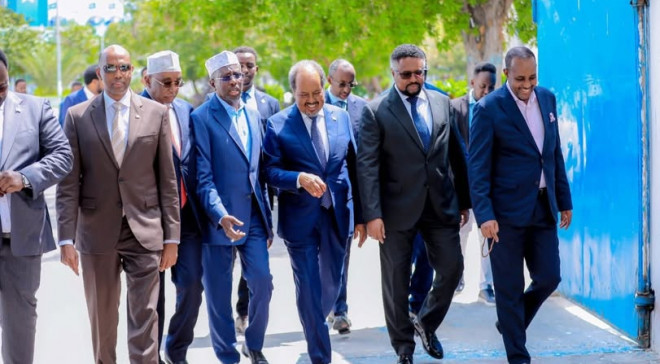
MOGADISHU, Somalia — In a city long shaped by political brinkmanship, a series of carefully choreographed meetings this week in Mogadishu has raised cautious hopes of dialogue between Somalia’s federal leadership and its often-fractious regional and opposition figures.
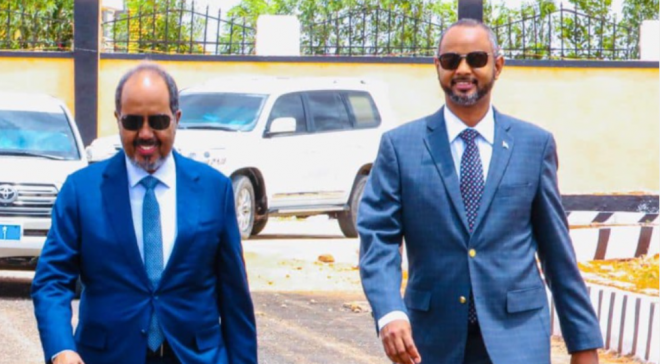
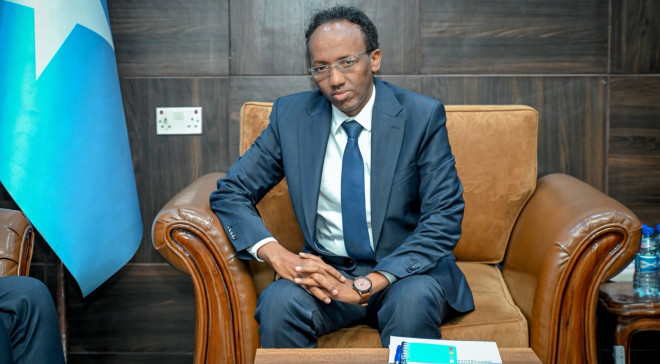
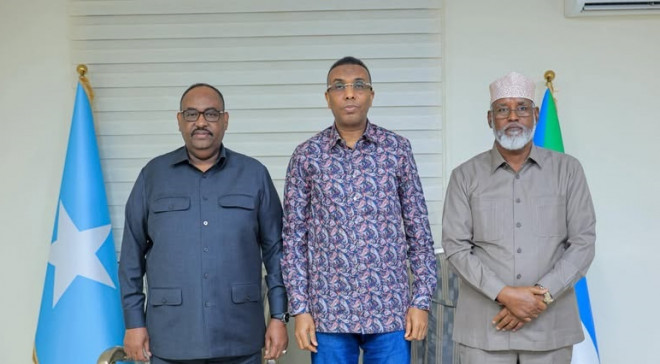
Late Tuesday, Prime Minister Hamza Abdi Barre met behind closed doors with the presidents of Jubaland and Puntland, two federal member states whose relations with the central government have at times been tense.
Official statements described the discussions as focused on national security, state-building and stability. But the timing — and the backdrop — suggested broader stakes.
Just hours earlier, President Hassan Sheikh Mohamud had hosted a high-level luncheon with opposition leaders in the capital. The gathering was aimed at easing mounting tensions over proposed constitutional reforms and the model for Somalia’s 2026 elections, issues that have exposed deep divisions within the country’s political class.
At the heart of the latest discussions is not only what will be debated, but where. Media reports indicate that leaders are divided over the venue for upcoming political talks — a symbolic but significant detail in a country where location can signal legitimacy, leverage and control.
For months, disagreements over amendments to the provisional constitution and the transition toward a new electoral framework have strained ties between Mogadishu and some regional administrations. Leaders in Puntland and Jubaland have called for broader consultation and consensus, while federal officials argue that reforms are essential to complete Somalia’s long-delayed political transition.
Security concerns add urgency to the negotiations. Somalia continues to battle the militant group al-Shabab, while grappling with economic pressures and climate-related crises. Analysts say prolonged political infighting risks undermining fragile gains made in recent years.
No breakthrough was announced after Tuesday’s meetings. But the willingness of leaders to sit together — over lunch tables and in late-night sessions — signaled at least a shared recognition that compromise may be necessary to preserve stability.
In Somalia’s complex federal landscape, even small steps toward dialogue can carry outsized significance.
GAROWE ONLINE