From Libya to Somalia: Türkiye’s Military Role Raises Questions Over Consent and Accountability
-
 GAROWE ONLINE
- Posted On 04-09-2026, 10:59AM
MOGADISHU, Somalia — Türkiye’s expanding military involvement in Somalia is drawing sharper scrutiny following accusations that Turkish aircraft participated in an attack on the Doolow residence of General Mahad Abdirahman Aden “Shub,” a former senior security commander opposed to Villa Somalia’s political direction.
Jubaland formally blamed Türkiye and Somalia’s federal authorities for the September 3–4 strike. Türkiye has not acknowledged conducting the operation, and no independently verified evidence identifying the aircraft has been released. General Shub survived.
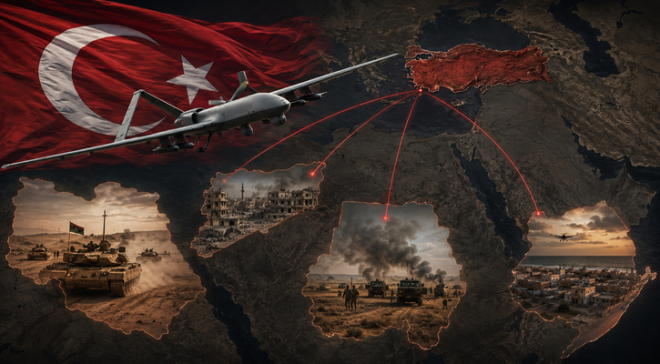
The controversy reflects a wider pattern in Türkiye’s foreign interventions, although Ankara has used different methods in Libya, Syria and Sudan.
In Libya, Türkiye intervened openly after signing security agreements with the UN-recognized government in Tripoli. Its parliament authorized the deployment in January 2020, and Ankara provided troops, advisers, drones, air defences and support from allied Syrian fighters. Türkiye publicly defended the operation as assistance requested by Libya’s legitimate government.
In Syria, Türkiye acted more directly and largely without Damascus’ consent. Since 2016, it has launched named military operations, deployed ground forces and conducted acknowledged airstrikes against ISIS and Kurdish-led groups it considers connected to the PKK. Ankara invokes national security and self-defence, while critics have challenged the legality and civilian consequences of its operations.
Sudan presents a quieter model. Türkiye has not announced a combat deployment, but documents examined by The Washington Post showed that the Turkish company Baykar supplied the Sudanese military with drones and missiles worth at least $120 million. Turkish-made drones have conducted strikes, although available evidence does not establish that Turkish personnel operated them or selected their targets.
Somalia now risks becoming a combination of these models: an officially acknowledged security partnership accompanied by military operations whose details, authorization and accountability remain unclear.
The federal government says Turkish military assistance supports operations against Al-Shabaab. But the political context has changed. President Hassan Sheikh Mohamud’s original four-year mandate reached its expected conclusion on May 15, 2026. Villa Somalia argues that constitutional amendments extended the presidential and parliamentary terms to five years, while opposition leaders and several federal member states reject their application to the incumbents. The extension’s legality remains disputed.
That dispute makes foreign military cooperation especially sensitive. Türkiye is working primarily through Villa Somalia even as Puntland, Jubaland, sections of South West State and national opposition figures challenge the federal administration’s authority and accuse it of disregarding Somalia’s federal consensus.
If Turkish aircraft are being used solely against Al-Shabaab, Ankara can point to its formal security partnership with Mogadishu. If they are used against federal-state forces or political opponents, however, Türkiye would risk crossing from counterterrorism assistance into Somalia’s internal power struggle.
The central concern is therefore not simply whether Türkiye is present. Its presence is well established. The question is whether a contested federal administration can authorize foreign military power against Somali actors without consultation, transparent legal oversight or agreement from the federal member state where an operation occurs.
Türkiye’s experiences in Libya, Syria and Sudan show that Ankara is often open about its broader strategic objectives while remaining silent about particular missions and operational decisions. In Somalia, that silence could deepen mistrust unless the Doolow strike is independently investigated and its chain of authorization disclosed.
GAROWE ONLINE