OP-ED: Ethiopia’s National Dialogue: Crafting Unity Within Rich Diversity
-
 Yidnekachew Tekle Minister Counselor, at the Ethiopian Consulate in Puntland State of Somalia
- Posted On 04-08-2026, 07:39AM
1. The Genesis of the Ethiopian National Dialogue
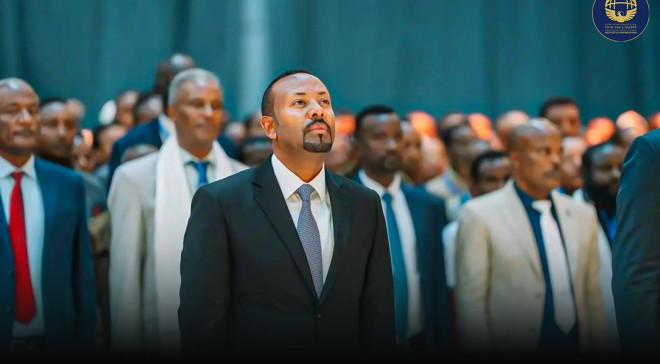
The historic Ethiopian National Dialogue officially commenced on July 15, 2026, gathering an unprecedented 4,000 citizens in Addis Ababa. This landmark assembly was convened to deliberate on critical issues identified during a comprehensive, nationwide agenda-collection process. These issues represent the primary focal points of divergence and disagreement within modern Ethiopian society.
The process is spearheaded by 11 independently elected commissioners. Their mandates were originally proposed through a transparent public process and officially endorsed on December 29, 2021, when the House of Peoples' Representatives approved Proclamation No. 1265/2021 to establish the Ethiopian National Dialogue Commission (ENDC).
For years, Ethiopians have raised concerns regarding how the current constitution impacts the country's political stability, institutional integrity, democratic evolution, peace, and long-term development. A widespread public perspective suggests that the current constitutional framework has inadvertently divided society along ethnic or regional lines rather than fostering national unity. Consequently, the core motivation behind the government’s initiation of this dialogue is a profound aspiration to secure a peaceful, prosperous, and stable Ethiopia for generations to come.
As the second most populous nation in Africa and the tenth in the world, Ethiopia is an ancient cradle of civilization. It is globally recognized for its warm hospitality, diverse cultural heritage, commitment to regional integration, and historic independence. Furthermore, the nation has a proud legacy of contributing to global peace and security, frequently deploying its military to United Nations and African Union peacekeeping missions in various unstable regions across the continent.
Domestically, Ethiopia is experiencing strong economic momentum driven by new home-grown economic reform policies. These robust socio-economic foundations, combined with a fresh political dispensation, underscore the country's vital role in regional security and economic integration. However, to sustain this progress, Ethiopia requires a solid constitutional foundation and a resilient system of governance. Therefore, this peaceful national dialogue is a critical imperative for consolidating lasting peace and ensuring sustainable development.
Ethiopia’s historic role as a regional peace broker demonstrates that complex crises are best solved through structured conversation. In a country characterized by vast diversity in religion, culture, identity, and geography, divergent viewpoints on national issues are inevitable. In this context, a national dialogue rather than the barrel of a gun presents the most realistic, democratic, and transparent mechanism to harmonize conflicting perspectives on the constitution and governance. By bringing together elders, youth, women, religious leaders, political parties, and academics, this dialogue serves as a bridge toward a shared national future.
2. The Eight Major Agenda Pillars
To give the discussions structural clarity, the ENDC categorized the nation's challenges into eight major agenda pillars:
· A. Nation-Building, State Structure, The Status and Administration of Federal Cities (Addis Ababa and Dire Dawa), Religious Affairs, Historical Grievances, and Reconciliation, Institutional Building, the Rule of Law, and Human Rights, Socio-Economic Issues, Farmers, and Pastoralist Livelihoods, Anti-Corruption and Good Governance, and Peacebuilding
As part of an ongoing validation process, the ENDC actively engaged civil society organizations, academic institutions, and research centers to review and refine these draft pillars. Speaking at a recent validation forum, Chief Commissioner Prof. Mesfin Araya emphasized that close collaboration with civil society has been instrumental in keeping the process thoroughly inclusive, neutral, and credible.
3. Current Status of the Discussion: The Harmonization Process
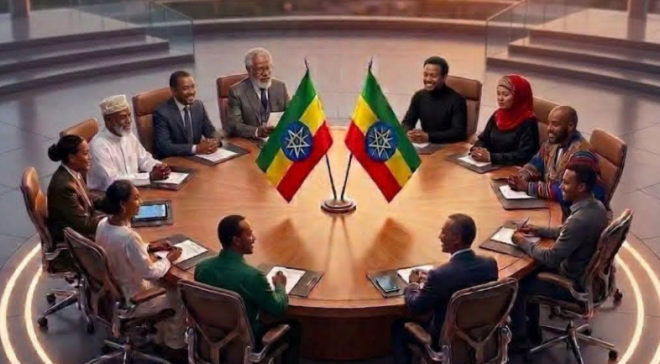
The dialogue operates through a structured, bottom-up methodology designed to give every participant a voice. The 4,000 delegates were initially divided into eight large thematic assemblies of 500 people, with each assembly focusing on one specific agenda pillar. To facilitate deep interaction, each group of 500 was further subdivided into 10 smaller discussion circles of 50 people. Once these micro-groups thoroughly debated their assigned topics, they synthesized their findings and transitioned into five intermediate groups of 250 people to reconcile conflicting viewpoints. Finally, these consolidated ideas were brought back to the main thematic assemblies for final, comprehensive deliberations. The dialogue is currently in this vital harmonization phase. The process demands more than just speaking; it requires deep listening, honest comparison of ideas, and a collective compromise toward shared principles.
4. Conclusive Remarks
Ultimately, the Ethiopian National Dialogue Conference demonstrates that national unity does not require homogeneity. Instead, it requires a collective willingness to engage with honesty, respect, and patience to build a political framework that transcends individual or factional preferences. Reconciling these diverse agendas is not merely an administrative exercise. It is a powerful act of national reconstruction. It embodies the hopes of millions of citizens that Ethiopia can translate complexity into coherence, conflict into constructive deliberation, and deliberation into a unified vision.
The success of this monumental initiative will ultimately depend on the political will to implement its outcomes and the continued commitment of all stakeholders to honour the harmonized compromises. By turning centuries of complexity into a roadmap for shared progress, the national dialogue stands as Ethiopia's best opportunity to secure its promised land of enduring peace, institutional stability, and shared prosperity.
By Yidnekachew Tekle, Minister Counselor, at the Ethiopian Consulate in Puntland State of Somalia.
DISCLAIMER: The views expressed in this article are the author's own and do not necessarily reflect Garowe Online's editorial stance.