OP-ED: From Defiance to Dialogue: The Unfinished Business of Somali Federalism
-
 Abdirahman Jeylani Mohamed
- Posted On 24-03-2026, 09:14AM
Somalia today is confronting a constitutional and political rupture that goes far beyond routine power struggles in fragile states. The confrontation between the Federal Government in Mogadishu, led by President Hassan Sheikh Mohamud, and the South West State administration, under President Abdiaziz Laftagareen, is rapidly evolving into the most dangerous test of Somalia’s federal experiment since its inception. This crisis reflects deep structural weaknesses in the Somali federal system, contested interpretations of constitutional legitimacy, and a profound mistrust between the centre and the periphery.
The South West State’s decision on 17 March 2026 to suspend all cooperation with the Federal Government was not a rhetorical flourish but a declaration of political autonomy born of accumulated frustration with how the federal centre has exercised power over the last two years. This rupture parallels earlier breakdowns in Puntland and Jubaland, where similar disputes over constitutional reform, electoral timing, and perceived federal encroachment have driven open defiance of Mogadishu’s authority.
At the heart of Laftagareen’s defiance lies a rejection—shared by other regional leaders—of constitutional amendments recently passed by the Federal Parliament that were intended to streamline governance and pave the way for elections. Critics, including South West, have argued that these changes were pushed through without broad consensus or meaningful inclusion of federal member states, undermining the federal bargain that was supposed to balance unity with regional autonomy. When Mogadishu declared that Laftagareen’s mandate had “expired” and would no longer recognize his appointments, it did less to resolve a dispute than to deepen the sense of illegitimacy felt by the South West leadership.
Laftagareen’s move to establish an Independent Electoral and Boundaries Commission in South West was therefore not a mere administrative adjustment. It was a political statement on the right of federal member states to shape their own democratic processes rather than being subsumed under a one-size-fits-all scheme emanating from Mogadishu. The region’s parliament earlier extended his term in a bid to align executive and legislative cycles responsibly, a constitutional decision that reflects a serious attempt to maintain continuity in governance rather than a blatant power grab.
This perspective, deeply rooted in the lived experience of South West authorities and many of their constituents, deserves to be taken seriously. The region’s population largely identifies with a federal model that empowers local leadership and safeguards their distinct political voice. It is a model that many Somalis envisioned after decades of marginalization and conflict—yet that model has been under strain as successive federal administrations have struggled to navigate clan dynamics, security imperatives, and the constitutional lacuna left by the absence of a fully agreed national charter.
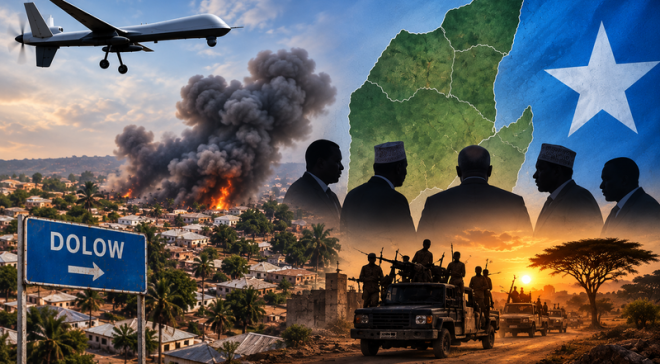
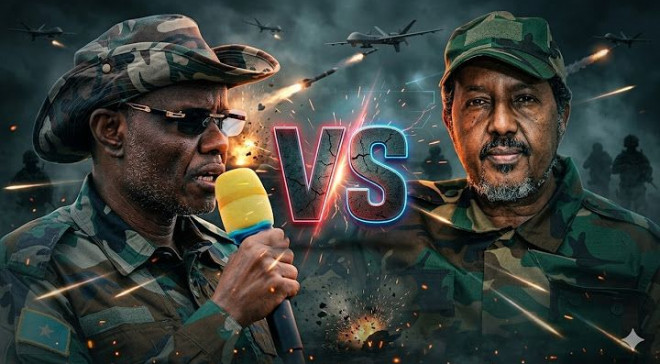
From Mogadishu’s vantage, the South West’s actions risk fragmenting national authority at a time when Somalia already confronts formidable security threats. The deployment of federal troops and Turkish‑trained units to strategic towns in the South West State signals that the centre fears losing not only political control but also influence over critical security corridors. Yet the federal response, heavy with military posturing, is itself fraught with danger. When a central government adopts forceful measures in disputes with regional authorities, it risks lending credence to the very argument Laftagareen and others have been making for months: that Mogadishu treats federal member states not as partners in a federation but as subordinate appendages to be ruled by decree.
This is not hyperbole. Laftagareen has publicly accused the federal government of mounting an “invasion” of his state and has mobilized regional forces to counter federal troop movements, further escalating the standoff. Such developments are precisely what critics of centralisation have long feared—a slide from political disagreement into militarised conflict. The proliferation of armed responses, however justified they may be in the minds of regional leaders, carries the risk of transforming a constitutional crisis into a combustible security crisis.
Understanding the South West position requires appreciating Somalia’s historical context. Since the collapse of central authority in 1991, the federal model was conceived as a compromise between the desire for national unity and the realities of clan identity and regional diversity. In years past, this model allowed for negotiated space where federal and regional authorities could coexist, even amid widespread violence and the enduring threat of al‑Shabaab. But as constitutional ambiguity has persisted—most notably, the failure to adopt a permanent constitution ratified by referendum—the federal bargain has frayed.
From a pragmatic standpoint, Laftagareen’s assertiveness can be seen not as intransigence but as a form of political agency in the absence of institutions capable of adjudicating disputes fairly and transparently. Regional leaders feel compelled to defend the autonomy that their constituents expect of them, especially when federal actions appear unilateral or dismissive of shared governance norms. The broadening coalition of opposition voices and allied federal member states backing South West only underscores that this is not an isolated quarrel but a symptom of deeper structural fissures in Somali federalism.
The consequences of failing to resolve this crisis are severe. Fragmented authority threatens not only political stability but also undermines unified efforts to counter insurgency, manage economic recovery, and deliver basic services. More ominously, militarised perceptions of political conflict risk entrenching divisions that could endure far beyond the current leadership cycle.
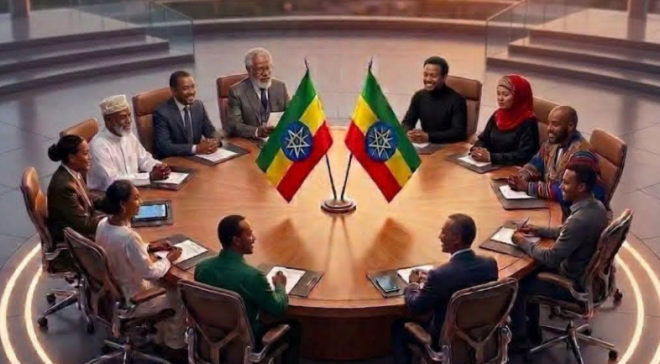
To avert this trajectory, what is needed is not the triumph of one leader over another but a revitalised constitutional dialogue that explicitly addresses the core questions dividing Mogadishu and the member states: how to distribute power, how to conduct credible elections, and how to balance national cohesion with regional autonomy. External actors, including the international community and African Union partners, have a role to play in facilitating such dialogue—but they must do so without appearing to endorse centralisation at the expense of local agency.
President Laftagareen’s stance, controversial as it may be, reflects a broader longing for a federal order that functions by consensus, not coercion. For Somalia’s federal experiment to endure, the solution must be political, not military. Rejecting simplistic narratives of loyalty or treason, foreign policy analysis should emphasise pathways toward negotiation, institutional compromise, and genuine inclusion of regional voices in shaping the future of the Somali state. That is the only viable alternative to a descent into deeper fragmentation.
The author is Abdirahman Jeylani, a Somali journalist based in Mogadishu, a foreign policy commentator and communications specialist. You can reach out to him: jaylaanijr@gmail.com