MOGADISHU, Somalia - Electricity consumption and generation have been on an upward trajectory for the past ten years since a relative return of stability and system of governance prevailed in Mogadishu and other parts of the country. In 2014, a patchwork of up to 56 privately-owned power companies provided power to Mogadishu alone.
Now, through a series of mergers and acquisitions, the sector is well reformed and utility companies can deliver much more stable and reliable electricity to businesses and households with some companies such as BECO reporting the reliability of over 95% –a rate higher than that of regional utility companies.
On the other hand, the joinder eliminated several major challenges facing the energy companies, including financial constraints, lack of investment, and shortage of skilled workers.
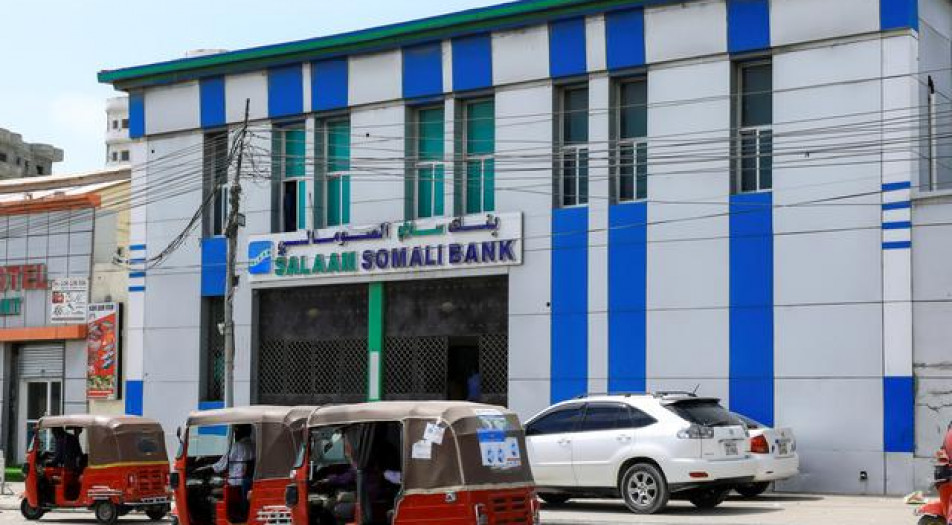
The move also ruled out the messy and unorganized above-ground utility wires, restoring the charm of the towns and mitigating the risk of the dangling wires. The alliance also led to better collaboration and customer convenience.
Salaam Somali Bank’s Green Lending Initiative
In a bid to encourage and promote renewable energy that is safe for the environment, Salaam Somali Bank in 2017 launched albeit in low profile a pioneering Green Lending Initiative for utility Companies committed to preserving the environment as a test pad. This was after Somalia signed the landmark Paris Climate Agreement in 2015 as part of its commitment to adopt climate-compatible and environmentally sustainable pathways.
"Recent studies have found that over 90% of the Somali economy is run by private enterprises. It is also worth mentioning that almost all studies have shown that Africa in general and coastal countries, like Somalia, in particular, are very vulnerable to climate change effects. Having said that, We, at Salaam Somali Bank, are keen to take our responsibility and do whatever we can in mitigating the risks of climate change so that we have taken upon ourselves to reduce air pollution," Salaam Somali Bank Investment Manager Abdinasir Fidow said.
"The reason we have set it up in a special and important way is that Salaam Somali Bank barely makes any profit from it, hence the bank has set requirements that are different from those of the other businesses," he added.
Despite the abundance of sunlight in Somalia, generating electricity using Photovoltaic Solar Panels is still very expensive due to the shortage of skilled labour force and the logistics that involve it a major challenge that hinders initiatives such as Salaam Somali Bank’s green lending initiative. Therefore, most utility companies prefer to burn fossil fuels to generate power.
This Assessments made at the time indicates that 100% fuel-based production of electricity in the country was the biggest environmental threat, for example in 2016 Mogadishu's demand for electricity was put at 24 MWT, but within five years, it had increased to 65MWT, reflecting the growing demand in the market.
Beginning of the project
BECO, with funding from the Salaam Somali Bank, has launched a US $10 million projects to generate environment-friendly energy from solar that began in 2018. It now produces 8MWT per month. The company's total output is currently 65MWT. This means that 1.2% of the company's total electricity production is generated from solar energy.
Diesel generators and solar farms are combined within a Hybrid system with SCADA-controlled configuration. Officials say the company's entire electricity generation needs to be environmental-friendly by 2035, with the addition of energy generation from wind power.
BECO's investment support received from Salaam Somali Bank covers the construction of the new Photovoltaic Solar Power Plant in the northern outskirts of Mogadishu.
"For the past seven years, we have been working on putting up the electricity infrastructure in the city, as the previous government-built power system has completely collapsed, and when we are done with this, we turned our focus on streamlining energy generation and that is how the idea of environment-friendly generation was born,” said BECO General Manager Ahmed Dheere.
"It is a daunting task that the whole world is trying to address, but we now have the funding, the skills, and the long-term strategy to help us achieve it and we are also committed as a company," he added.
The fast-growing demand for electricity in Somalia, which the company is required to meet coupled with the need to adopt new sources of energy, poses another challenge to BECO, as it may lead to a prolonged project implementation period.
Cost of Electricity
At the inception of BECO Company in 2014, Somalia topped the list of high electricity costs in Africa at the US $1.2 per KW which reduced to the current US $0.25 per KW in 2021. This is occasioned by the improved electricity infrastructure and the Management believes that the costs will further reduce upon less reliance on fuels and adoption of renewable energy sources.
"It will take some time, but this will boost the country's productivity and encourage more entrepreneurs to start major factories, and it is something that we look forward to,” Said Ahmed Dheere.
"As long as the country has reliable and reasonably priced electricity, the country's productivity increases, which means that Somalia has the opportunity to compete with the rest of the world for its industrial production," he added.
Government efforts to support and encourage environmentally friendly energy
The Federal Government of Somalia plays an important role in educating the public, but there are few laws and regulations to regulate the sources of electricity that are used.
However, there is coordination between the Power companies and the relevant government agencies such as the Environment Department of the Prime Minister's Office that jointly plan what can be done.
Departmental Director Mr. Ahmed Yusuf believes that Power generating companies have a major role in the government's efforts to reduce air pollution, further welcoming the special support by local banks towards these efforts.
"The most important thing that will help us in these efforts is to control climate change which is fuelled by our lifestyle, likewise, it will improve the health of our people in the near future," said Ahmed.
"The government is playing a central role in ensuring the implementation of all enabling measures, and this is one of the things we have been focusing on in the recent past," he added.
GAROWE ONLINE