Somalia’s 2027 Election Plan Faces Fresh Uncertainty as Opposition Rejects Timetable
-
 Staff Reporter GAROWE ONLINE
- Posted On 15-10-2026, 12:39PM
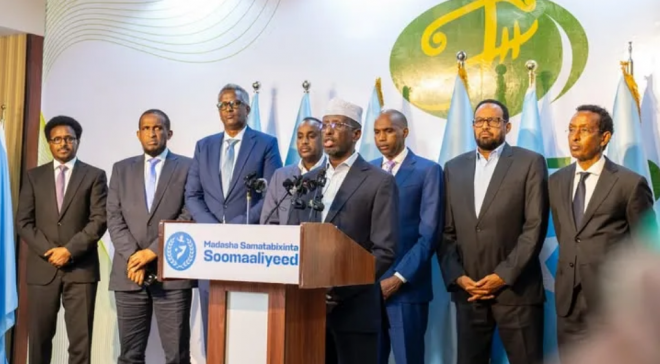
MOGADISHU, Oct 15 — Somalia’s opposition has rejected a timetable for parliamentary and presidential elections announced by the national electoral commission, calling the process one-sided and saying it lacks the political consensus needed to resolve a deepening dispute over the country’s electoral system.
The commission said on Thursday that elections for both houses of parliament would be held on April 15, 2027, followed by a presidential vote on May 15.
The announcement comes amid a prolonged political standoff between President Hassan Sheikh Mohamud’s government and opposition leaders over constitutional amendments, the presidential mandate and plans to introduce a direct voting system.
Opposition groups have argued that the proposed timetable was drawn up without an inclusive political agreement. They have also boycotted parliamentary proceedings on constitutional amendments and rejected changes they say cannot legitimately provide the basis for extending the government’s mandate or setting a new election schedule.
Mohamud, who took office in 2022, has defended the constitutional changes approved by parliament earlier this year, arguing that they provide a legal basis for an additional year in office and establish a framework for direct elections.
His government has sought to replace Somalia’s indirect electoral system, under which clan elders and delegates play a central role in selecting lawmakers, with a system based on one person, one vote. The plan has faced opposition from political leaders and some federal member state authorities, who have raised concerns over the process and the lack of agreement on its implementation.
The dispute intensified after the opposition said Mohamud’s term had ended earlier this year. The federal government declared a transition period in May, but disagreements over the constitutional changes and the election process remain unresolved.
The electoral commission said the presidential election date was based on a provision stipulating that the president serves a five-year term beginning on the day of the presidential inauguration.
The opposition’s rejection raises questions over whether the announced timetable can secure broad political support, a key challenge as Somalia prepares for the next electoral cycle.
Security concerns also complicate plans for nationwide voting. Al-Shabaab, an al Qaeda-linked militant group, continues to control territory in parts of the country and carries out attacks against government forces and civilians. Preparations for direct elections have so far made limited progress beyond some localised areas.
The political impasse leaves unresolved how the government and its opponents will agree on the constitutional framework, the duration of public mandates and the arrangements for elections in 2027.
GAROWE ONLINE