OPINION — Four Years of President Hassan Sheikh’s Somalia End: From Fragility to Fracture
-
 Abdirahman Jeylani Mohamed
- Posted On 16-05-2026, 08:55AM
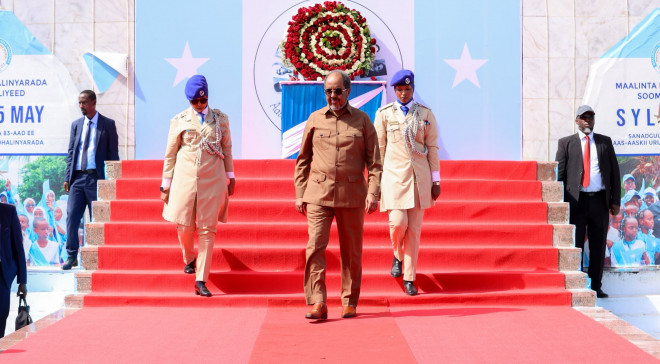
MOGADISHU, Somalia – On 15 May 2026, President Hassan Sheikh Mohamud reached the formal expiration of his constitutional mandate amid one of the most politically fragile moments Somalia has experienced in recent years.
The symbolism is profound: the end of his four-year presidency coincides with Somali Youth Day, commemorating the generation of the Somali Youth League (SYL) that once envisioned a unified, democratic, and sovereign Somali republic grounded in civic nationalism rather than fragmentation and political crisis.
Instead, Somalia arrives at this moment deeply polarized, constitutionally uncertain, and increasingly disillusioned with the trajectory of its political leadership.
When Hassan Sheikh Mohamud returned to power in May 2022, he presented himself as a statesman capable of restoring stability after years of institutional confrontation and political deadlock. International partners welcomed his return as an opportunity to rebuild consensus within the federal system, intensify the campaign against Al-Shabaab, and reposition Somalia diplomatically within a rapidly shifting Horn of Africa.
His administration initially benefited from significant political goodwill. Military offensives against Al-Shabaab generated optimism that Somalia might finally reverse the insurgency’s territorial resilience. International debt relief milestones were celebrated as evidence of improving state capacity. The government also promoted ambitious rhetoric surrounding democratization and universal suffrage, portraying itself as the administration that would move Somalia beyond the exhausted clan-based indirect electoral model.
But four years later, the defining reality of Hassan Sheikh’s second presidency is not democratic transformation or national reconciliation.
It is deepening fragmentation.
The most consequential failure of the administration has been its inability to construct political legitimacy broad enough to stabilize Somalia’s fragile federal order. Instead of reducing tensions between Mogadishu and federal member states, the presidency increasingly became associated with centralization, coercive politics, and the securitization of political disagreement.
Opposition regional administrations repeatedly accused the federal government of weaponizing state institutions and security forces against political rivals. Rather than functioning as neutral national institutions, sections of the security apparatus were increasingly perceived as instruments of political pressure designed to discipline dissenting federal actors and opposition networks. This dynamic dangerously weakened confidence in the impartiality of the Somali state itself.
In fragile post-conflict societies, perceptions matter as much as formal legality. Once federal forces are viewed as partisan tools rather than national institutions, the entire architecture of political coexistence begins to erode.
The presidency’s deteriorating relationship with key federal member states reflected a broader failure to manage Somalia’s delicate federal balance. Political disputes that required negotiation increasingly evolved into confrontations defined by mutual suspicion, constitutional ambiguity, and elite power struggles. The result was not state consolidation, but a widening legitimacy crisis.
At the same time, the government’s domestic governance record became increasingly controversial.
Forced evictions in Mogadishu and other urban centers displaced vulnerable families with little institutional protection or meaningful compensation, reinforcing public perceptions that economic development under the current administration disproportionately favored politically connected elites while marginalizing ordinary citizens. For many urban poor, the language of reconstruction became inseparable from dispossession itself.
This perception proved politically corrosive because it deepened the growing divide between official narratives of progress and the lived experience of many Somalis.
Meanwhile, the administration’s signature military project — the “total war” campaign against Al-Shabaab — failed to deliver the strategic breakthrough repeatedly promised by Villa Somalia.
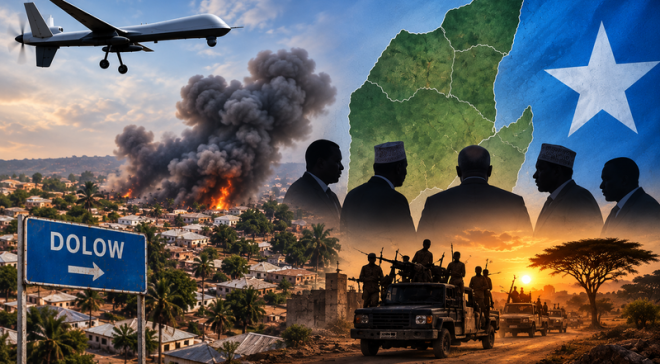
Although Somali forces and allied clan militias initially recaptured territory in central regions, the momentum gradually stalled. Al-Shabaab demonstrated remarkable operational adaptability, continuing to conduct deadly attacks across the country, including inside Mogadishu itself. The insurgency remained capable not only of survival but of projecting psychological dominance through high-profile bombings, assassinations, and economic coercion.
The government’s inability to decisively weaken Al-Shabaab exposed the structural limitations of Somalia’s security strategy. Military offensives, absent durable political reconciliation, local governance capacity, and institutional legitimacy, cannot sustainably neutralize insurgent movements embedded within fragile state environments.
By the final year of Hassan Sheikh’s mandate, the gap between official declarations of victory and the reality on the ground had become increasingly difficult to conceal.
Equally damaging were the administration’s failures in foreign policy and in managing national sovereignty.
Somalia entered Hassan Sheikh’s second term facing one of the most volatile geopolitical environments in the Horn of Africa in decades: intensifying Gulf rivalries, Ethiopian-Somali tensions, Red Sea militarization, and growing competition among regional and global powers for strategic influence. Yet rather than strengthening Somalia’s diplomatic leverage, several developments exposed the vulnerability of its external posture.
Most significantly, Israel’s growing diplomatic engagement with Somaliland — culminating in moves toward formal recognition — represented a major symbolic and strategic setback for Somalia’s territorial unity. For many Somalis, the development reflected not merely a bilateral diplomatic issue, but a broader erosion of Mogadishu’s capacity to defend the principle of Somali sovereignty internationally.
The possibility of formal international recognition for Somaliland during Hassan Sheikh’s presidency intensified anxieties that Somalia’s territorial fragmentation was gradually becoming normalized within parts of the international system. Critics argued that the federal government appeared diplomatically reactive rather than strategically proactive at a moment requiring sophisticated regional statecraft.
This perception further reinforced domestic accusations that the administration had failed to protect core national interests despite its extensive engagement with foreign partners.
At the societal level, the cumulative consequences of these failures have been severe.
Young Somalis increasingly view politics as a closed arena dominated by elite competition, corruption, and coercion rather than democratic participation or national service. Critics, journalists, and activists complained of intimidation and shrinking civic space. Cases involving the detention of government critics became symbols of a broader democratic regression. Thousands of Somali youth continued risking death across deserts and seas in pursuit of opportunity abroad because they no longer believed the Somali state could provide security, justice, or economic dignity.
This may ultimately define the legacy of Hassan Sheikh Mohamud’s second presidency more than any constitutional amendment or diplomatic summit.
A nation enters dangerous historical territory when its younger generation loses emotional investment in the state's future.
And yet reducing Somalia’s current crisis entirely to one individual would oversimplify the depth of the country’s structural dysfunction. Hassan Sheikh inherited a state weakened by decades of civil war, insurgency, institutional collapse, dependency on external actors, and unresolved constitutional contradictions. Somalia’s federal system remains incomplete, its democratic culture fragile, and its political elite deeply fragmented.
But leadership is measured precisely by the ability to navigate such constraints.
Four years after returning to power, Somalia remains without an agreed constitutional settlement, without stable federal cohesion, without universal elections, and without a decisive security victory against Al-Shabaab. Instead, the country once again approaches political transition under conditions of uncertainty, mistrust, and constitutional dispute.
This is the deeper tragedy of 15 May 2026.
The day that once symbolized the birth of Somali political nationalism now coincides with another reminder of how far the Somali Republic remains from the aspirations of the SYL generation: a sovereign state capable of commanding legitimacy internally while defending unity externally.
The central promise of Hassan Sheikh Mohamud’s presidency was that Somalia would finally transition from permanent fragility toward stable democratic statehood. As his mandate expires, that promise remains profoundly unfulfilled.
The author is Abdirahman Jeylani Mohamed, a Somali journalist based in Mogadishu, a foreign policy commentator, and communications specialist. You can reach out to him: jaylaanijr@gmail.com