Is Somaliland’s Recognition the Issue, or Has Somali Leadership Already Failed?
-
 GAROWE ONLINE
- Posted On 26-12-2025, 09:48PM
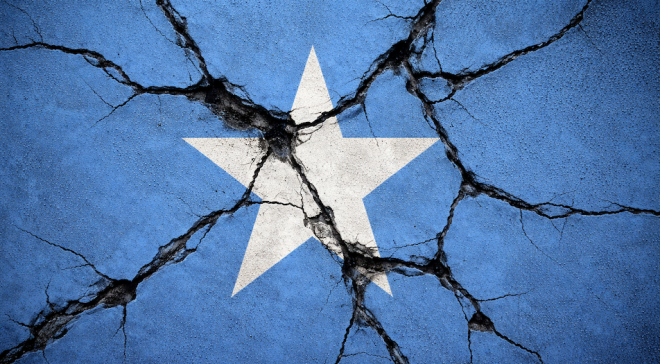
EDITORIAL | Somaliland’s pursuit of recognition is not something that emerged over a matter of hours or days. Somaliland formally declared its separation from Somalia in 1991, meaning the debate confronting Somalia today has persisted for nearly 34 years. Throughout this long period, no Somali leadership made genuine reconciliation, inclusive national dialogue, or a unified effort to restore Somali unity—based on consent and mutual agreement—a top priority.
Since the end of the transitional governments (2000–2012), Somalia’s political leadership has largely been confined to Mogadishu, frequently engaging in political and legal disputes related to the Provisional Constitution jointly adopted by the remaining parts of the country. Instead of serving as a foundation for national cohesion, the constitution often became a battleground for political power struggles.
Following the collapse of Somalia’s central government, the country adopted a federal system, which at the time was viewed as the only viable mechanism to preserve national unity and territorial integrity. However, this system was negatively exploited by politicians serving in the Federal Government, who equated Somalia’s international recognition and external resources with governance, without using them to build trust and coexistence with other Somali communities beyond the capital.
The growing distance between Mogadishu’s leadership and the rest of the Somali polity, combined with the absence of genuine political will, pushed Somaliland further away from the prospect of reunification. This was compounded by insecurity, political infighting, and the absence of a broadly agreed electoral system across what remained of the country once known as Somalia.
Somali leaders who remain permanently based in Villa Somalia, along with officials operating under the banner of the nation without truly serving it, consistently overlook the fact that Mogadishu’s status as a capital is inseparable from the very existence of the country once known as Somalia.
At the same time, shifts in the global order have played a significant role in the current situation. Somaliland’s leadership, which has sought recognition for decades, has capitalized on changes in global politics—particularly the declining influence of international institutions such as the United Nations, the African Union, and the Arab League. The current administration in Washington has clearly demonstrated a preference for narrowly defined national interests over multilateral norms that were previously respected.
Israel’s move to claim recognition of Somaliland is an attempt to capitalize on the vacuum left by Somalia’s neighboring maritime states. This created an opportunity for Israel to take advantage of Somaliland’s strategic location. Somalia as a whole occupies a geostrategic position, particularly Somaliland and Puntland, which lie along some of the world’s most important maritime routes.
Given this reality, it is imperative that the outgoing Federal Government and the politicians positioning themselves to replace the current leadership seriously address the fate of the remaining Somali polity. Failure to do so risks pushing the country once known as Somalia far beyond reach.
GAROWE ONLINE