China increases its interests in Somalia amid rising illegal fishing concerns
-
 Staff Reporter GAROWE ONLINE
- Posted On 17-12-2025, 08:57AM
MOGADISHU — China has been accused of engaging in extensive illegal, unreported and unregulated (IUU) fishing off the coast of Somalia, exacerbating depletion of key marine resources while Beijing simultaneously expands its commercial, military and geopolitical footprint in the Horn of Africa, analysts and local reports say.
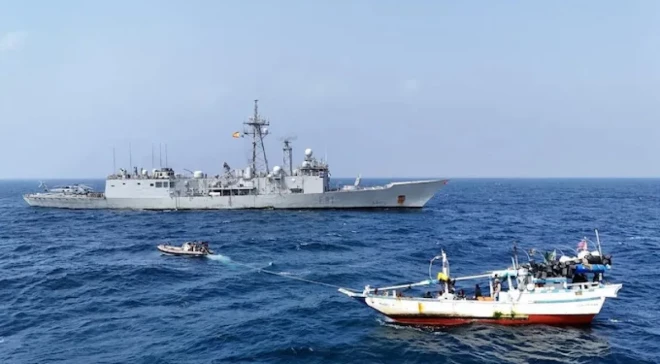
Chinese distant‑water fishing fleets, particularly vessels linked to the Liao Dong Yu fleet, have been operating in Somali waters, often beyond legal limits and using destructive fishing practices that put pressure on valuable species such as yellowfin tuna. Recent investigations show that these operations have taken a heavy toll on marine stocks and local livelihoods, with illegal fishing reportedly costing Somalia as much as $300 million annually.
Local fishermen and environmental analysts have raised concerns that Chinese trawlers are overfishing off Somalia’s long coastline — which stretches some 3,333 km — and undermining the sustainability of tuna populations that are critical to both Somalia’s economy and global seafood markets. Experts warn that without stronger enforcement, stocks could collapse in the coming years.
The presence of Chinese fishing vessels has also sparked tensions on the ground. In late 2024, a Chinese‑owned trawler registered in Puntland was hijacked off the northeast Somali coast by armed men who accused foreign fleets of depleting fish stocks and threatening coastal communities’ way of life, a dramatic sign of growing local frustration with unregulated fishing.
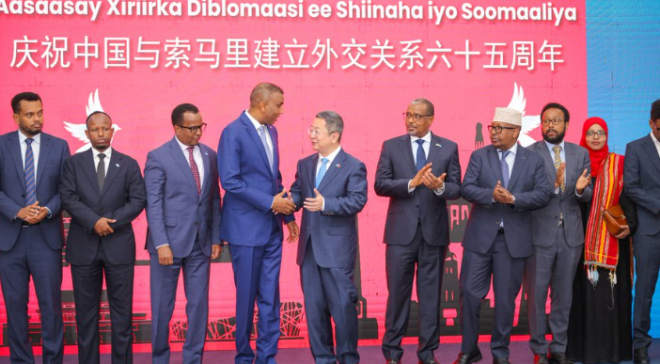
Beijing’s expanding interests in Somalia go beyond fisheries. China has been deepening trade ties and infrastructure engagement across Africa, and maintains a strategic naval presence in the region, using its base in Djibouti to project influence and counter rivals such as Taiwan. Taipei maintains close relations with Somaliland, an autonomous region in northern Somalia, which Beijing views as a challenge to its claim over Taiwan.
Somali authorities have struggled to police their vast territorial waters effectively, hindered by limited enforcement capacity and fragmented governance. International partners, including the United Nations and regional bodies, have supported efforts to strengthen maritime security, but experts say more robust mechanisms are needed to curb IUU fishing and protect Somali marine resources.
China’s role in Somali waters highlights broader tensions over access to natural resources and influence in East Africa, as small coastal states grapple with powerful distant‑water fleets while trying to safeguard their economic and environmental future.
GAROWE ONLINE