US Airpower Shrinks ISIS Space, Pushes Leaders Underground in Somalia: AFRICOM
-
 Staff Reporter GAROWE ONLINE
- Posted On 05-02-2026, 05:56AM
Washington – The United States Africa Command (AFRICOM) has defended its increased airstrikes in Somalia, describing them as “critical support” that has helped Somali forces weaken ISIS-linked militants and retain key territory in the country’s volatile northeast.
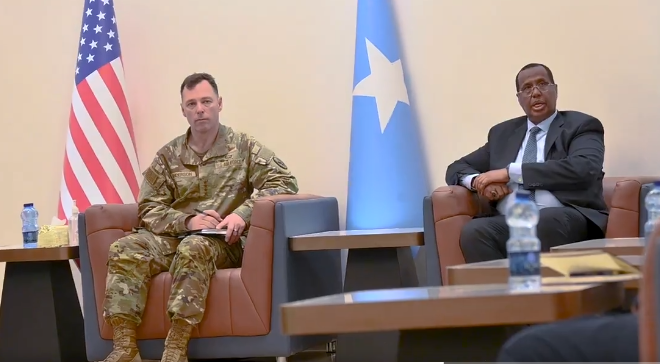
Speaking during a digital press briefing, AFRICOM commander General Dagvin Anderson said the strikes were carried out in close coordination with Somali partner forces and were designed to provide capabilities that local troops cannot generate on their own, including advanced intelligence, surveillance and precision targeting.
The comments come amid heightened scrutiny of US military activity in Somalia, where Washington has stepped up air operations against armed groups affiliated with ISIS and al-Qaeda-linked al-Shabaab.
Anderson pointed to recent operations in Puntland’s Golis Mountains as a clear example of the impact of US support. Somali forces, backed by American air power and intelligence, launched an offensive against ISIS fighters entrenched in the rugged mountain range, an area long considered difficult to control.
“These strikes have allowed them to stay engaged, shrink the territory held by ISIS, and, most importantly, maintain pressure in the Golis Mountains,” Anderson said, citing assessments provided by Somali partners on the ground.
According to AFRICOM, sustained military pressure has pushed ISIS leadership deeper into hiding, limiting the group’s ability to coordinate operations or move freely across the region. The command argues that this has reduced the militants’ operational space and disrupted their command structures.
While airstrikes have drawn the most attention, AFRICOM officials stressed that they form only one part of a broader US-Somalia security partnership.
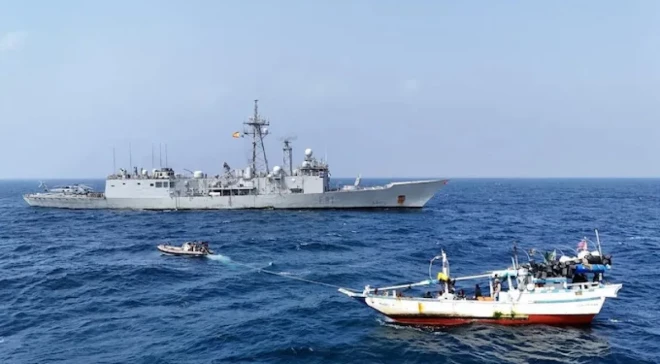
AFRICOM’s Command Senior Enlisted Leader, Sergeant Major Garric M. Banfield, highlighted parallel efforts to strengthen maritime security along Somalia’s long and vulnerable coastline. He said the United States is providing technical assistance to help Somali authorities better monitor their territorial waters.
“This includes technical support to help Somali authorities monitor their waters and counter threats such as arms smuggling, piracy and illegal fishing,” Banfield said. “The goal is to improve security capabilities to protect shorelines and borders.”
US officials link maritime insecurity to wider regional instability in the Gulf of Aden and the Red Sea, warning that smuggling networks operating along the coast can funnel weapons and resources to armed groups inside Somalia.
AFRICOM views Somalia as a central front in its broader campaign against extremist organizations in Africa, particularly al-Shabaab and ISIS affiliates, which Washington says continue to pose a threat beyond Somalia’s borders.
Anderson emphasized that US involvement is intended to complement, not replace, Somali forces.
“Somali troops conduct ground operations, while the US provides intelligence, training, logistical support and targeted airstrikes when necessary,” he said.
AFRICOM officials argue that this partnership model allows Somali forces to sustain momentum against militants while gradually building their own capacity to handle security challenges independently.
Throughout the briefing, AFRICOM leaders repeatedly linked security operations to wider goals of stability and development in Somalia.
“Security leads to stability, and that stability creates opportunities,” Anderson said, adding that long-term cooperation with African partners remains central to the US military’s strategy on the continent.
GAROWE ONLINE