OP-ED: A Partnership Worth Questioning: Somalia Must Rebalance Its Relationship With Türkiye
-
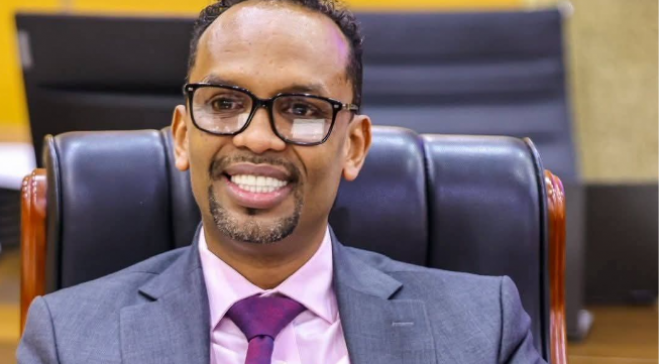
 Abdifatah Abdinur Puntland's State Minister of the Presidency
- Posted On 10-04-2026, 12:18PM
The partnership between and is often described in glowing terms — a model of South-South cooperation, a success story of reconstruction, a symbol of solidarity. Turkish-built roads, renovated hospitals, and military training programs are held up as proof of a relationship that works.
But in Somalia today, a more uncomfortable conversation is taking shape — one that asks not whether Türkiye has helped, but whether the terms of that help are sustainable, transparent, and ultimately in Somalia’s long-term national interest.
This is not an argument against partnership. It is an argument against complacency.
The Problem With Gratitude as Policy
For more than a decade, Türkiye has stood as one of Somalia’s most visible partners, with a presence spanning infrastructure, aviation, education, and security—an engagement that undeniably matters in a country emerging from decades of conflict. Yet, gratitude alone cannot serve as a governance framework, and increasingly, Somali analysts, policymakers, and citizens alike are beginning to ask a Basic question. Who benefits more?
Somalia provides strategic access to one of the world’s most important maritime corridors. It offers opportunities in ports, logistics, and construction sectors that shape the future of any economy. Yet concerns persist that Somalia’s bargaining power in negotiating these arrangements remains weak, and that the public has little visibility into the structure of the deals.
When agreements affecting national assets are not fully transparent, suspicion is inevitable. And in fragile states, suspicion can be destabilizing.
Control Without Ownership
Türkiye’s role in rebuilding Somalia’s infrastructure is undeniable. But infrastructure is not just about construction — it is about control.
Who manages the ports?
Who sets the terms of operation?
Who captures the long-term revenue?
Without clear answers, development risks becoming dependent.
The concern is not that Türkiye is uniquely overreaching. It is that Somalia, like many developing states, may be entering agreements without sufficient safeguards to ensure long-term national ownership and institutional learning.
If local capacity does not grow alongside foreign involvement, Somalia may find itself reliant on external expertise for the very systems it is trying to build.
The Quiet Risks of Security Partnerships
Nowhere is the balance more delicate than in security cooperation.
Türkiye has trained thousands of Somali soldiers, contributing to the rebuilding of national forces. Supporters see this as essential to stabilization. Critics see something more complicated.
In a politically polarized environment, security forces are never just security forces. They are also symbols of power.
When training, doctrine and operational capacity are heavily shaped by a single external partner, it raises legitimate concerns about:
Institutional independence
Command integrity
Long-term strategic autonomy
Even the perception that security institutions are influenced from outside can erode public trust.
A Red Line: Political Neutrality
There is another risk — more subtle, but potentially more damaging.
Foreign partners must not only be neutral; they must be seen to be neutral.
In Somalia, where political competition remains fragile, any perception that external actors are aligned with the administration carries consequences.
Continued security cooperation during politically sensitive periods, particularly in the absence of fully inclusive electoral processes, can be interpreted — fairly or not — as indirect support for the incumbent government.
That perception alone can:
Undermine institutional legitimacy
Deepen political divisions
Fuel public distrust
International partnerships cannot afford ambiguity on this point. Neutrality must be absolute and visible.
When Security Becomes Political
The risks do not end there.
If Turkish-trained Somali forces are perceived to be drawn into domestic political dynamics, the consequences could extend beyond Somalia’s borders.
Such a development would not only intensify internal tensions — it could also expose Türkiye to:
Reputational damage
Diplomatic complications
Public backlash within Somalia
This is not an abstract concern. In fragile states, the line between national security and political power is often thin — and easily crossed.
The solution is clear, even if difficult: security forces must remain strictly professional, non-partisan, and accountable to constitutional authority — not political actors.
The Geopolitical Reality
Somalia does not operate in a vacuum.
Its location in the Horn of Africa places it at the center of competing regional and global interests. A close alignment with any single partner risks drawing the country into broader rivalries it cannot control.
A balanced foreign policy is not a luxury. It is a necessity.
Somalia must be open to cooperation with Türkiye — but also with others. Diversity in partnerships is not disloyalty. It is a strategy.
Sovereignty Is the Test
Ultimately, the question is not whether Türkiye has contributed to Somalia. It has.
The question is whether the current structure of the relationship strengthens Somalia’s sovereignty — or quietly constrains it.
A strong partnership should:
Build local capacity
Transfer knowledge
Ensure transparent agreements
Deliver measurable benefits to citizens
Anything less risks creating a cycle of dependency that becomes harder to reverse over time.
A Necessary Reset
Somalia does not need fewer partnerships. It needs better ones.
That begins with:
Full parliamentary oversight of major agreements
Public transparency on strategic contracts
Clear safeguards for national ownership
Strict neutrality in political and security matters
Diversification of international relationships
These are not radical demands. They are the minimum standards of responsible statecraft.
The Bottom Line: The Somalia–Türkiye partnership is not beyond repair, but neither is it beyond question—and it should not be, because the true measure of any international relationship lies not in how it appears in the short term, but in whether it ultimately leaves a nation stronger, more independent, and firmly in control of its own future; and by that standard, Somalia deserves nothing less.
By Abdifatah Abdinur, Puntland's State Minister of the Presidency
DISCLAIMER: The views expressed in this article are the author's own and do not necessarily reflect Garowe Online's editorial stance.